
Quality Care
The ASAM Criteria, Fourth Edition
An evidence-based framework for organizing addiction treatment systems, improving patient care, and facilitating recovery.
Purchase Get Training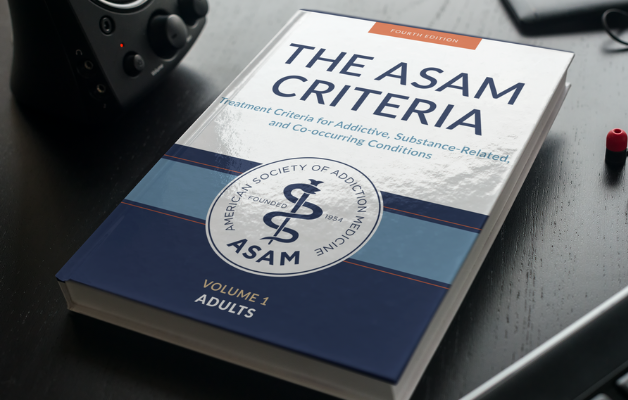

Standards to Improve Addiction Care and Support Recovery
The standards within The ASAM Criteria aim to increase access to high-quality care that can improve the health and well-being of all people impacted by addiction.
The ASAM Criteria offers an evidence-based, standardized, and organized way to connect people with substance use disorder (SUD) to services based on their individual needs and circumstances. These standards provide a framework for organizing addiction treatment systems and a foundation for state and national efforts to advance the quality of addiction care.
Last updated in 2023, The ASAM Criteria provides a consistent way to:

Assess a Person's Medical, Psychological, and Social Needs

Develop an Individualized Treatment Plan

Match Patients to the Right Level of Care

Define What Services Should Be Offered at Each Level of Care
Use of The ASAM Criteria can increase patient engagement, improve outcomes, and reduce under or over treatment.
As America continues to grapple with high rates of SUD and overdose, there is an urgent need to improve the quality and delivery of patient-centered care. By rooting SUD prevention and treatment in one common framework such as The ASAM Criteria, we can ensure that everyone who provides, covers, or uses SUD services are “speaking the same language” and aligning clinical recommendations and insurance coverage with evidence-based practices.
DOWNLOAD THE SPEAKING THE SAME LANGUAGE TOOLKIT
ASAM Criteria Correctional Settings and Community Reentry Volume Standards
Public Comment Now Open Until August 31
ASAM is looking for feedback on draft standards for The ASAM Criteria, Fourth Edition Volume 3: Correctional Settings and Reentry.
Click the link below to learn more.
Deadline: August 31
Learn More
ASAM Criminal Justice Case Writers
CALL FOR APPLICATIONS
ASAM is looking for volunteers to write mock clinical cases for patients in jail, prison, and re-entering the community. Contributors will be mentioned in The ASAM Criteria, Fourth Edition Volume 3: Correctional Settings and Reentry.
Click the link below to learn more and apply.
Application Deadline: Ongoing
Apply
Promoting Person-Centered Care
Addiction is a complex chronic disease that affects each person differently. The ASAM Criteria has several guiding principles that promote care that is personalized and responsive to a patient’s unique medical, social, and psychological circumstances.
Expand all
The ASAM Criteria, Fourth Edition Volumes
The Fourth Edition of The ASAM Criteria will be released in four volumes, and uses a rigorous methodology for evidence review and formal consensus development under the guidance of editorial subcommittees.
The ASAM CRITERIA
Adults
Standards for adults with substance use disorder and co-occurring conditions.
The ASAM CRITERIA
Adolescents and Transition-Aged Youth
Standards for adolescents (under 18) and transition-aged youth (16-25).
The ASAM CRITERIA
Correctional Settings and Reentry (anticipated 2028)
Standards for the treatment of people involved in the justice system.
The ASAM CRITERIA
Behavioral Addictions (TBD)
Standards for gambling disorder, internet and gaming addiction, sex addiction, and others.
Components of The ASAM Criteria
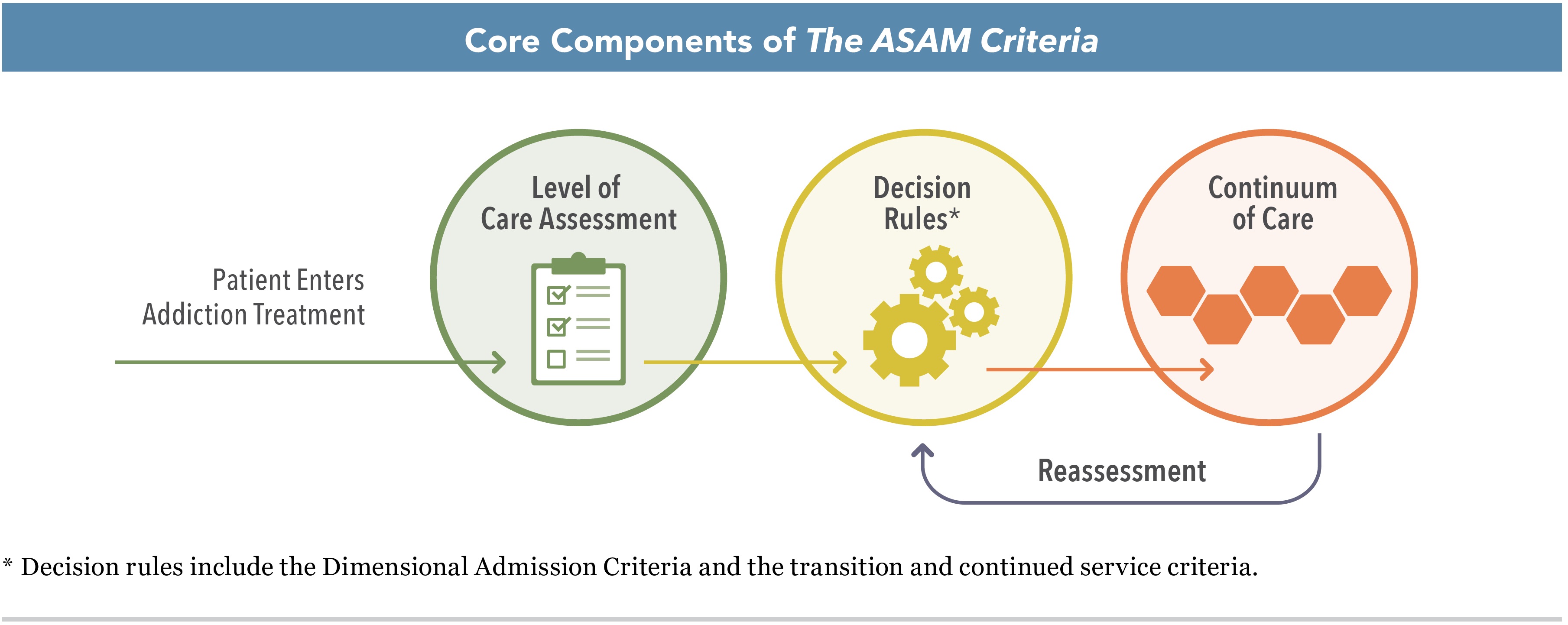
Level of Care Assessment
Used when a patient enters addiction treatment to identify their clinical needs.
Decision Rules
The results of the Level of Care Assessment are applied to the Dimension Admission Criteria, which take into account a patient’s needs, obstacles and liabilities, as well as their strengths, assets, resources, and support structure. Subdimensions in bold inform level of care recommendations and initial treatment for immediate needs; however, all subdimensions are considered for treatment planning purposes.
Dimension 1: Intoxication, Withdrawal, and Addiction Medications
| Dimension 4: Substance Use-Related Risks
|
Dimension 2: Biomedical Conditions
| Dimension 5: Recovery Environment Interactions
|
Dimension 3: Psychiatric and Cognitive Conditions
| Dimension 6: Person-Centered Considerations
|
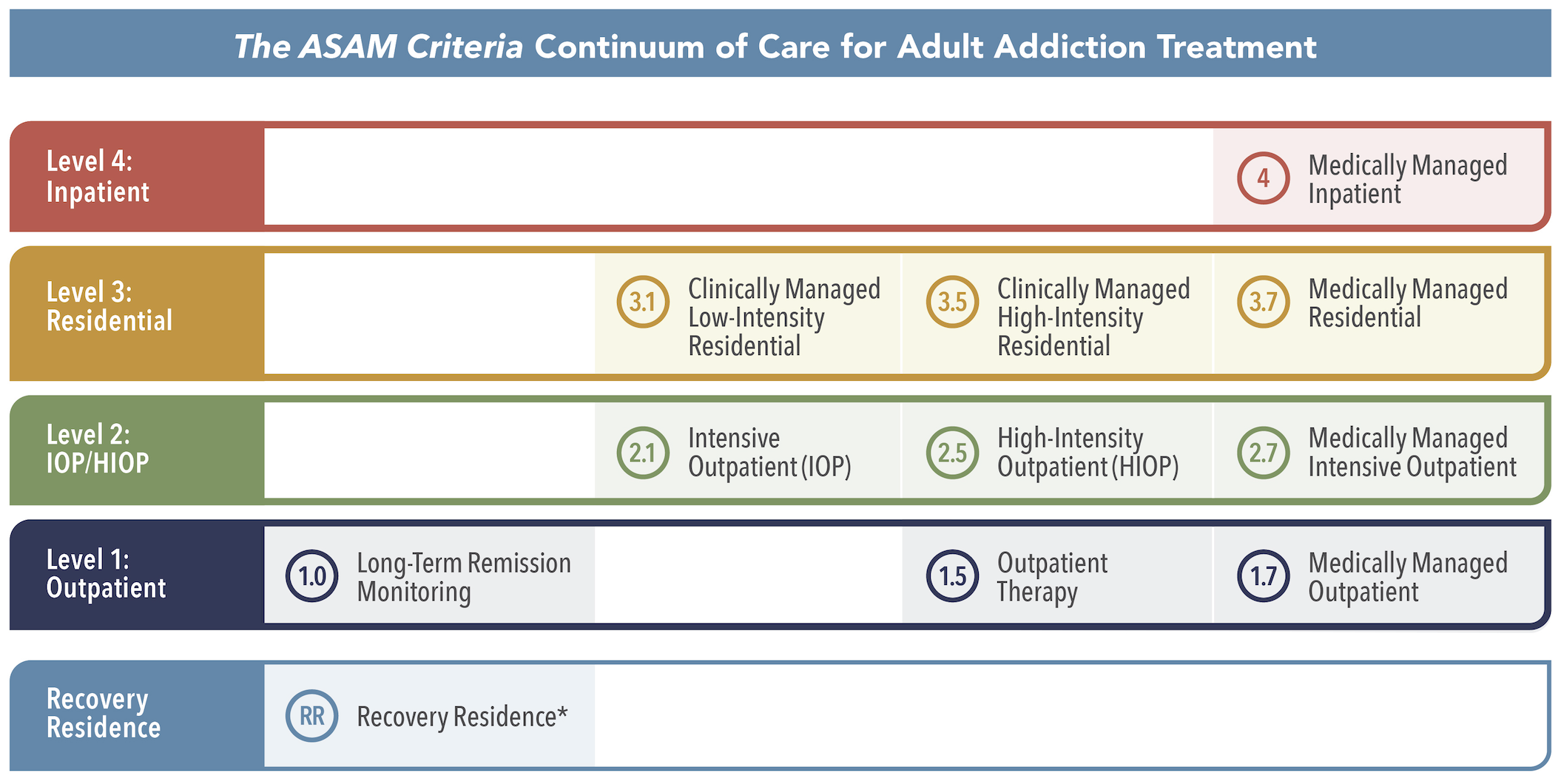
Continuum of Care
The ASAM Criteria defines standards of the different levels of care across the continuum, describing the setting, staffing, service intensity, and other core elements at each level of care.
As a patient moves through treatment, they are regularly reassessed. The transition and continued service criteria are applied to determine if the patient is ready to move to a less intensive level of care, requires a more intensive level of care, or should continue at the current level of care.
See the Adolescent Continuum of Care here.