
Blog
One Fellowship Director’s Excitement for the Next Generation of Addiction Medicine Professionals
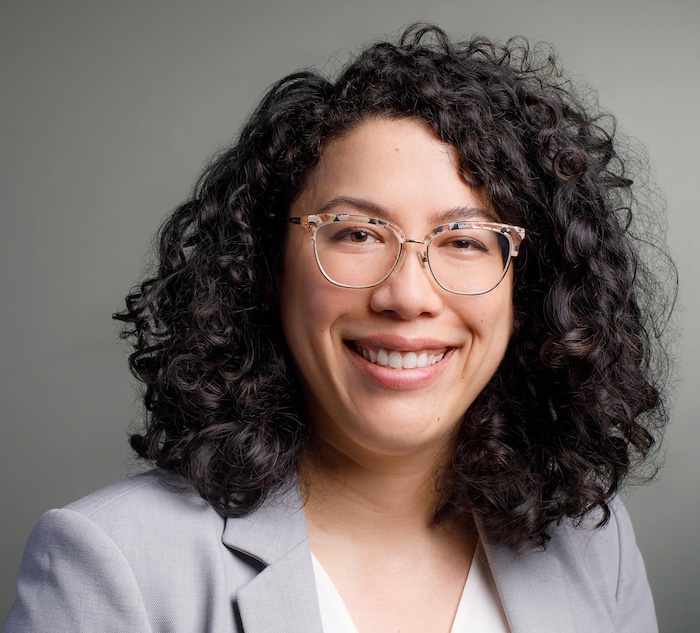
Carolyn Chan,
MD, MHS-MEd
At the ASAM 57th Annual Conference, ASAM recognized this year’s annual award winners for their exceptional contributions to the field of addiction medicine.
Among them was Carolyn Chan, MD, MHS-MEd, program director of the University of Cincinnati Addiction Medicine Fellowship and recipient of the Fellowship Directors Award, which honors outstanding clinician educators.
Like many others, Dr. Chan found her way into addiction medicine unexpectedly. Several impactful experiences caring for patients with substance use disorder inspired her to complete an addiction medicine fellowship and, later, to become a fellowship director herself. That journey brought her to Cincinnati, where she helped launch the university’s ACGME-accredited fellowship program.
In this Q&A, Dr. Chan shares how her background in improv theater has helped her teach trainees how to be ready for the unexpected and fine-tune their communication skills. She also offers practical ways aspiring clinician educators can support and mentor the next generation of addiction treatment professionals.
Q: What led you to pursue a career in addiction medicine?
A: When I was a resident, I had a couple of patient cases that really impacted me and led to my interest in addiction. A lot of this was primarily due to a lack of patient access to addiction care.
For example, patients asked me to start buprenorphine for opioid use disorder in the hospital, yet I wasn’t able to do that at the time. This was when the X-waiver was still in place, and there were a lot of institutional barriers to being able to provide this incredible evidence-based treatment. I decided, hey, you know what? I think I want to get my X-waiver. I signed up for training, not thinking that this would be something I would do routinely in my practice, but it was a service I wanted to be able to offer to patients who needed it.
During my residency training, I got my X-waiver. When I took my first job in hospital medicine, I started to prescribe buprenorphine quite a bit for patients and just saw how absolutely life changing it was for people. And it really inspired me to say, wow, I love doing this. I want to be able to do this better, serve patients better, and learn how to use all of the evidence-based medications to care for folks.
Q: How has your background in improv theater shaped your approach to education?
A: I found my training as an improviser to be incredibly helpful for everything that I do in patient care and in my career as a physician. There’s definitely a cohort of folks who are working within the medical field to really try and use improv theater-inspired skills to help improve communication. Because when we think about it, almost everything we do on a day-to-day basis is improvised, right? We can walk into a patient room, and we’ll read the chart, and it says one thing, and then something else entirely happens. So, this idea that we can really use improv to build our skills to sort of be ready for the unexpected has been impactful on my career, and just simply fun to be able to use these techniques to teach learners how to improve communication.
One project I worked on during my medical education fellowship was using improv to teach motivational interviewing. Thinking about how we can really encourage our trainees to learn the skills and be adaptable and flexible in the moment is really where I think these improv training skills really shine, and it’s a blast.
Q: The field of addiction medicine is changing fast. How else are you continuing to adjust your training to better support learners?
A: A huge part of this really comes from my fellows, the residents, and the medical students I work with, and having conversations with them to determine how we can help them better care for patients.
Our drug supply is continually evolving. We need to be able to adapt with limited information and ensure that trainees really can provide the best care possible in these sorts of uncertain circumstances where we have emerging adulterants come out of the blue every couple of years. I think a lot of it is honestly trainee-led and driven by just having informal conversations on how we can better teach you and prepare you better to care for patients with addiction.
Q: What do you see in the next generation of addiction treatment professionals that makes you excited about the future of the field?
A: I feel like each generation of physicians is increasingly talented. When I get the chance to read an interview for fellowship applicants, I’m always in awe. I think that they come from a place of just wanting to care for and serve patients the best they can. They ask such wonderful, thought-provoking questions and encourage us educators to stay on our game in terms of knowing the best evidence in patient care. Watching them grow as clinicians to where they’re able to fully care for patients on their own is incredibly rewarding.
Q: How do you think the field can continue to support future addiction medicine clinicians?
A: I think a huge thing is reaching out and ensuring that we have good relationships with trainees so that they may actually look at any of us and say, wow, that’s really cool, I want to learn how to do that. And being able to be those role models, as well as making sure we give people the opportunity to work with us and see what we’re doing.
I love having different rotators in our clinic or on our consult service, because it gives them a chance to see what it is that we do. And I think there’s something special about actually seeing it. It’s a little harder, I think, to just read about this in an academic journal and really understand what it is addiction medicine doctors do.
But having clinicians give the opportunity for people to shadow them and set up different clinical rotations so folks actually get the opportunity to see it, try it, and then hopefully fall in love with it, I think is really important.
Q: What’s your advice to people who are looking to contribute to this workforce development movement?
A: I think for folks who are just interested in starting to be a clinician educator, looking for mentors at their own institution can be powerful and helpful, as well as joining a professional organization such as ASAM or whatever professional home folks may join. There are often a lot of mentorship opportunities within those professional settings that people can and should take advantage of.
It’s sometimes hard to get your foot in the door, so I think when there are opportunities to volunteer to give lectures to different student groups, taking people up on that opportunity and starting to give lectures and getting feedback on your own teaching skills from trainees can be really helpful in terms of getting involved in medical education.
Q: You received the Fellowship Directors Award at the ASAM Annual Conference. What does this award mean to you?
A: I was completely shocked and humbled and honored to receive the award. I really feel that the work that I do as a program director relies on a huge team of people. I think it speaks not just to myself, but to the entire team that I have in terms of faculty, interprofessional staff, and program coordinators. It was meaningful to say, hey, the work we’re doing means something, and that we’re really doing our best to train the next generation. It’s really the team that deserves the award.
Q: What’s the best part of being a fellowship director?
A: Truly the best part of my job is working with patients, building these relationships, and just watching people succeed and thrive. It’s also incredible to work with trainees and let them see that caring for patients with addiction is really rewarding, it’s meaningful, and addiction is a treatable chronic disease. And that’s what keeps me here — the patients and learners.