Blog
Distinguished Fellow Recognition Advances JHSPH Grad’s Career
A 2016 graduate of the Johns Hopkins University School of Medicine has taken her career to the next level since becoming a distinguished fellow with the American Society of Addiction Medicine (ASAM).
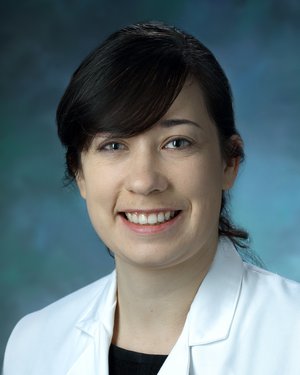
Megan Buresh, MD, DFASAM, Assistant Professor of Medicine in the Division of Addiction Medicine at the Johns Hopkins University School of Medicine with a joint appointment in epidemiology at Johns Hopkins School of Public Health, earned the prestigious honor in April 2022.
“It's great to have my contributions to addiction medicine acknowledged,” said Dr. Buresh, who also serves as medical director of the Inpatient Addiction Consultation Service at Johns Hopkins Bayview Medical Center. “I also think it adds additional credibility to my expertise in the work that I do.”
Dr. Buresh said she believes the designation will help boost her career in addiction medicine, in ways similar to her ASAM membership.
“I think it just adds extra weight to my expertise as an addiction medicine physician,” said Dr. Buresh, ASAM Board Member and Chair of ASAM’s Addiction Consult Special Interest Group. “My connections with ASAM in general – not just as a distinguished fellow – have been really helpful with networking and connecting.”
Serving the Underserved
Dr. Buresh, whose clinical expertise includes addiction medicine, HIV, HCV, and internal medicine, received her Bachelor of Arts in Biochemical Sciences from Harvard University and, in 2013, earned her medical degree from Johns Hopkins University School of Medicine.
In 2016, she completed her residency in internal medicine at Brigham and Women's Hospital. That same year, she also became board certified in internal medicine by the American Board of Internal Medicine. In 2019, Dr. Buresh became board certified in addiction medicine through the American Board of Preventive Medicine.
“I got my first exposure to treating opioid use disorder with buprenorphine at the beginning of my residency,” she said. “I was still in training for those years, but that's where I got the exposure and mentorship to pursue this as my career.”
A desire to serve underserved populations is what initially attracted Dr. Buresh to the field of addiction medicine. Later in medical school, she focused on patients with HIV and global health levels. Eventually, she treated underserved patients through an outpatient clinic at Upham’s Corner Health Center, a federally qualified health center in Boston.
“It was just really amazing to be able to treat addiction, integrated in a general medical setting,” she said. “A lot of times in internal medicine and primary care we're dealing with other chronic diseases, like obesity and diabetes. It's really about slow incremental change.”
Dr. Buresh said becoming board certified in addiction medicine has also helped her career in many ways.
“The recognition of the field as an actual medical specialty reinforces the view of addiction, the medical disease part of it, and then the treatment for it,” she said. “With the historical thinking about addiction as a moral failing and more of a social thing, that recognition of it is a field that is something you can specialize in is really helpful. It put us on the same playing field as other medical specialties.
“It's particularly helpful when you're doing specialty addiction treatment, like our consult service, to be able to say we are board-certified addiction specialists. It's also something we look for in hiring now.”
A Growing Need
Dr. Buresh has witnessed firsthand the increased interest in the field of addiction medicine, which is rapidly expanding.
“I see a lot of excitement among med students, residents that I work with,” she said. “That’s really going to be where we transform things.”
There are multiple reasons one should consider addiction medicine as a career path, she added.
“First of all, it's incredibly rewarding to work with patients with substance use disorders,” she said. “You also can have a variety of types of settings you can work in – it doesn't just have to be primary care. It can be OBGYN – anything where you're following people longitudinally as well as specialty addiction settings. And there's a lot of options to do flexible clinical work.”
Another reason physicians should consider focusing on addiction medicine is the large gap in treatment. Currently, only 8 percent to 10 percent of Americans with SUDs are receiving treatment. Additionally, overdose deaths continue to rise, even this far after the peak of the coronavirus pandemic.
“And we continue to be hurt by the fentanyl contamination of the drug supply,” Dr. Buresh added. “Honestly, while opioids are more at the forefront, alcohol continues to be one of the largest causes of morbidity and mortality. We also saw that increase during the pandemic with social isolation. So, yeah, there’s just an incredible need.”
The need for more people to enter the field of addiction medicine has never been greater, Dr. Buresh said.
“Because there’s such a need, there's a lot of opportunity, including those who want to do research and education,” she said. “There's a chance to become a leader in the field quickly because in some ways it is a young field and a smaller field. It’s a great community of people doing the work both in community settings and more academic settings like I'm doing. There’s also a special loan repayment program now for folks who are doing addiction work because of recent legislation. There’s lots of opportunity and more support to do addiction medicine.”